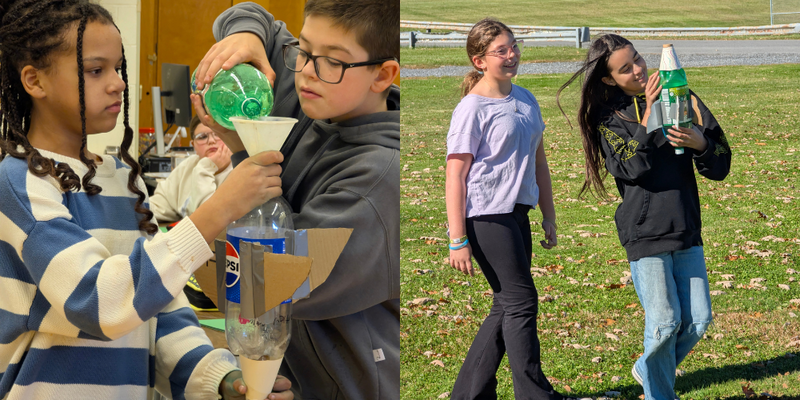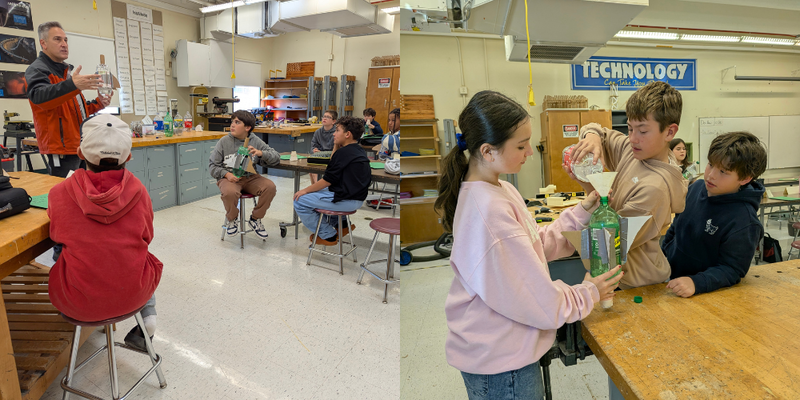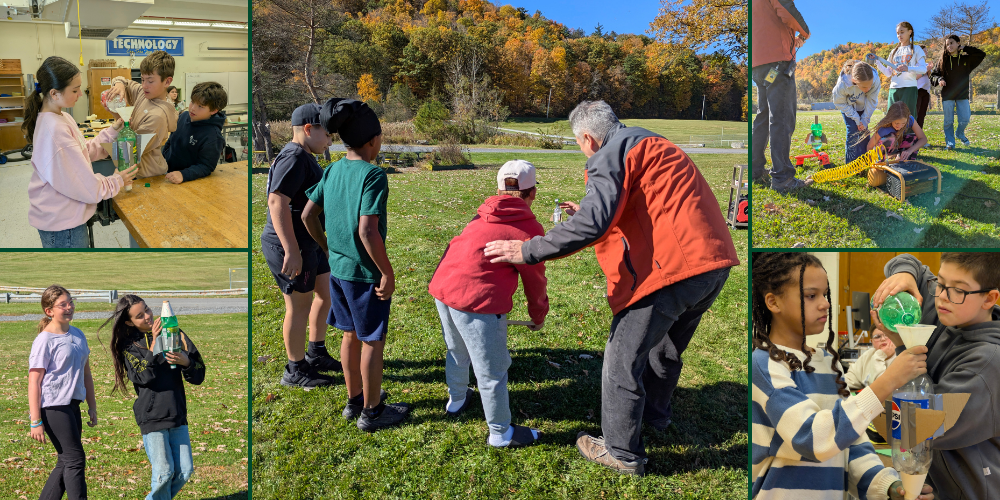
Students in Mr. Dettelis’ technology classes are taking learning to new heights as they explore the fundamentals of aerodynamics and physics in motion by designing, building, and launching their very own rockets from household items.
As part of the first round of launches, students worked in teams to determine which fin shapes would help their rockets travel as straight as possible. After designing their rockets, teams took turns testing their creations and predicting how high they might fly. The activity challenged students to apply scientific concepts while working collaboratively to solve design problems.
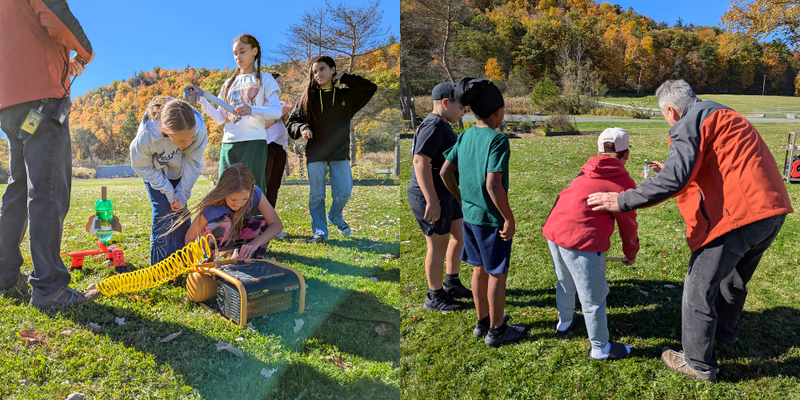
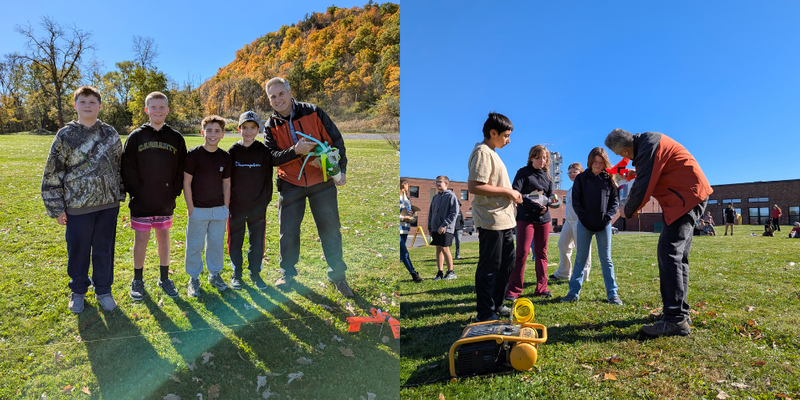
Launch day put students’ planning and preparation to the test. Using water and compressed air to power their designs, students prepared for launch by pressurizing the bottles. Each team member had a role in the process, from operating the compressor to completing safety checks and preparing the rockets for takeoff.
As the rockets soared into the air, students retrieved their designs and assessed them for damage, considering what worked well and what could be improved. These observations will help guide their next round of designs, giving students the opportunity to refine their rockets and apply what they learned during the initial launches.
The next phase of the project will take creativity and experimentation even further. Students will explore new design possibilities, including rockets that spiral or travel in different directions, while continuing to investigate how design choices affect a rocket’s flight.
Through this engaging project, Mr. Dettelis’ students are discovering that science is about more than making predictions — it’s about testing ideas, analyzing results, learning from mistakes, and using that knowledge to improve. With another launch on the horizon, students are ready to put their revised designs to the test!